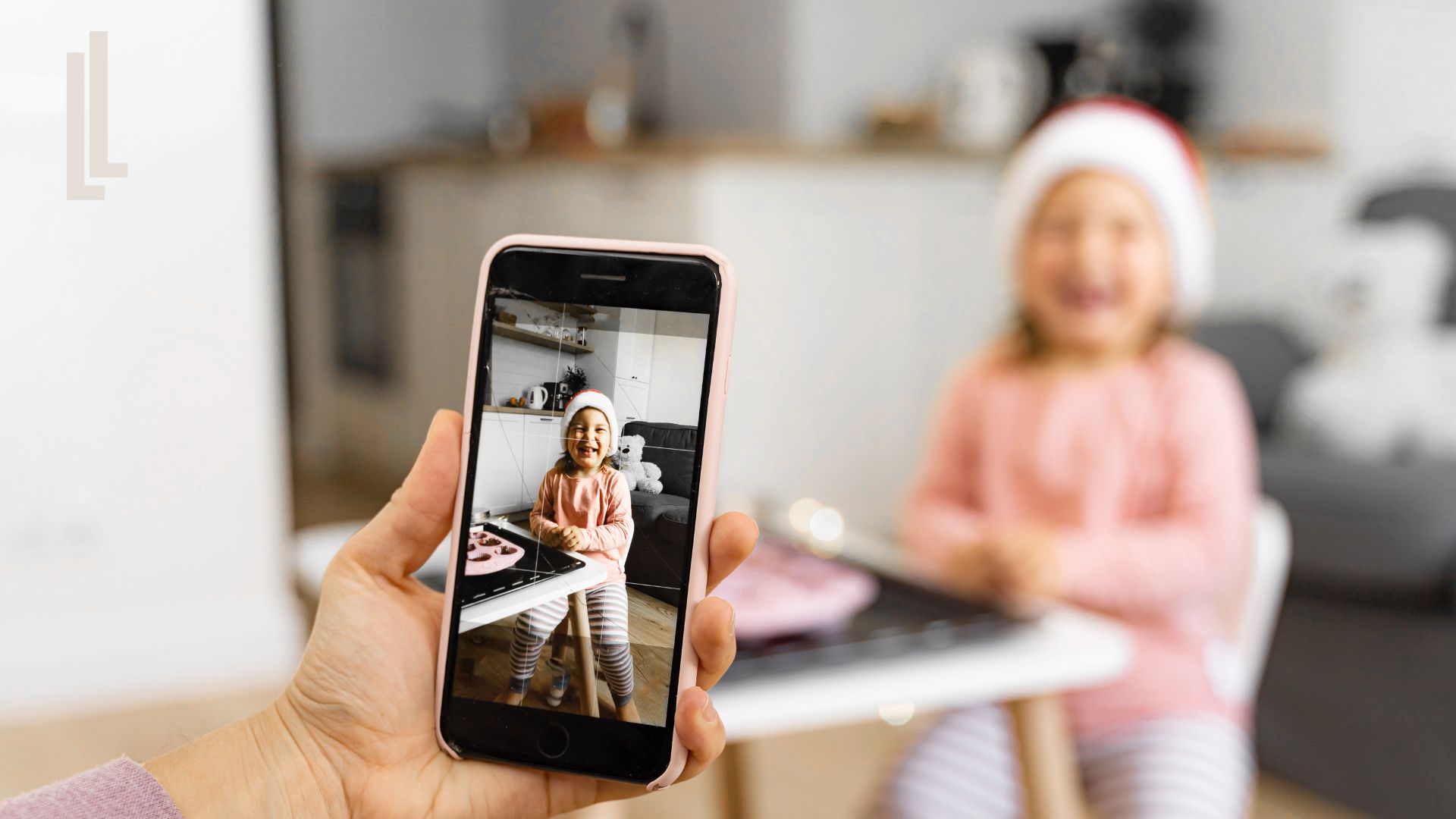

Parents should seriously reconsider posting photographs and personal information about their children online.
As an attorney who specializes in cyber sexual misconduct and a mom of two, I need you to know that even “safe” options put your children at risk.
And with the rise of AI-generated images, it’s becoming impossible to share photos of your kids while still protecting them.
What happens to the images I share of my kids on social media?
Once you post a photo online, you are no longer in control.
Photos posted on social media can be downloaded, saved, shared, and manipulated without your knowledge.
Some AI systems are now trained on all publicly available internet content. This means everything you share about your child online can be copied or repurposed in ways you can’t even anticipate and will likely never know about.
The cliché that “everything on the internet is forever” has taken on a whole new meaning with AI.
How do predators use photos and info?
There are countless ways child predators can use the photos and information you share about your children online.
They can take ordinary, harmless photos and:
- Identify or locate your child
- Learn your child’s routine and schedule
- Impersonate your child online
- Create sexualized deepfakes and AI-generated child sexual abuse material (CSAM)
Many parents share seemingly innocent information that can reveal or enable far more than you ever intended. This includes things like your child’s name, school, birthday, activities, team uniforms, or regular locations.
Is it safe to share photos and info about my kids on social media?
There’s no way to fully protect your child while still sharing their photo or key details about their life, routines, and activities online. But the more information you have, the better you can weigh the risks and make the best decision for you and your family.
Posting to a private account with 100 followers has a different risk level than posting to a private account with 2500 followers.
It’s important to know that some privacy settings may only offer limited protection. Unfortunately, there are many ways these settings can be violated or worked around.
Even deleting a post you’ve already made isn’t foolproof. There may be copies of the image that have already been downloaded, shared, and incorporated into datasets used by AI.
Regardless of what you may or may not have shared in the past, you can take measures to better protect your children now and in the future.
I recommend practical alternatives like:
- Limiting identifiable images as much as possible
- Not sharing school or location information
- Choosing not to use location tags
- Using private, family-sharing apps for personal photos and info
- Asking your children for their consent (when age appropriate) before posting anything about them
What United States v. Anderegg means for parents
A recent Seventh Circuit ruling highlights just how serious the issue of sharing images and information about your child online is today.
The court held that the First Amendment protects the private possession of AI-generated sexual images depicting fictional (not real, identifiable) children.
While the ruling doesn’t legalize all AI-generated CSAM or deepfakes involving actual children, it exposes a troubling gap between rapidly developing technology and existing law.
As parents, we need to be aware of the significant gap that exists between rapidly developing technology and the laws that currently exist.
We can’t rely on the courts to protect our children. AI and technology are advancing at lightning speed, and it’s impossible for the legal system to keep up.
The reality is that even if an AI-generated image doesn’t depict your actual child, the AI systems that create these images are trained using the very photos you share online and on social media.
You can’t control what happens with the images you share online, but you can control what you choose to share in the first place.
Want to help the parents in your community learn how to protect kids on social media and online?
I offer virtual and in-person training for schools, community and spiritual groups, and businesses.
Everyone, including your children, has a right to privacy and peace of mind.
I’m here to teach, train, and connect with parents, community leaders, teens, and tweens.
You can click here to learn more about the training services I provide at Lindsay Lieberman Law and Consulting.